
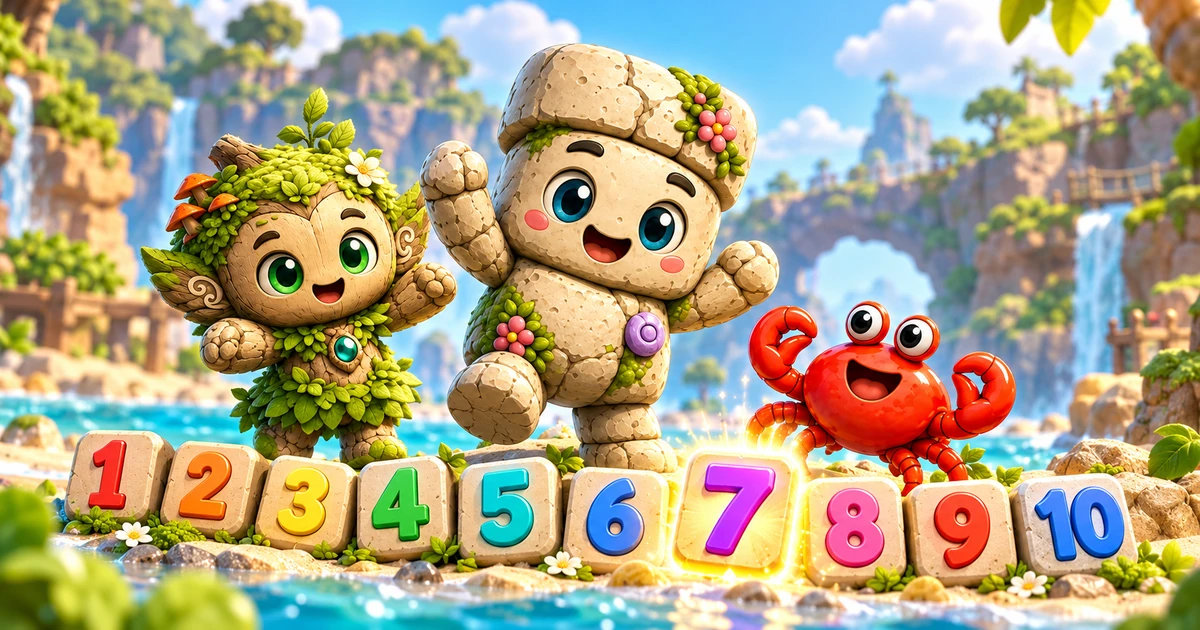
A child may happily count “one, two, three, four, five…” and still hesitate when you point to the written number 5.
That is completely understandable, because counting and number recognition are related skills, but they are not the same thing.
Understanding the difference can help parents choose simple activities that make early number learning more playful and easier to practise.
Counting and Number Recognition Are Different Skills
When children count, they practise saying number words in the correct order and gradually connecting those words with quantities.
Number recognition is different.
It means seeing a written numeral — such as 3, 7 or 9 — and identifying which number it represents.
A child might therefore be able to count from 1 to 10 from memory while still learning to recognise individual numerals when they appear in a different order.
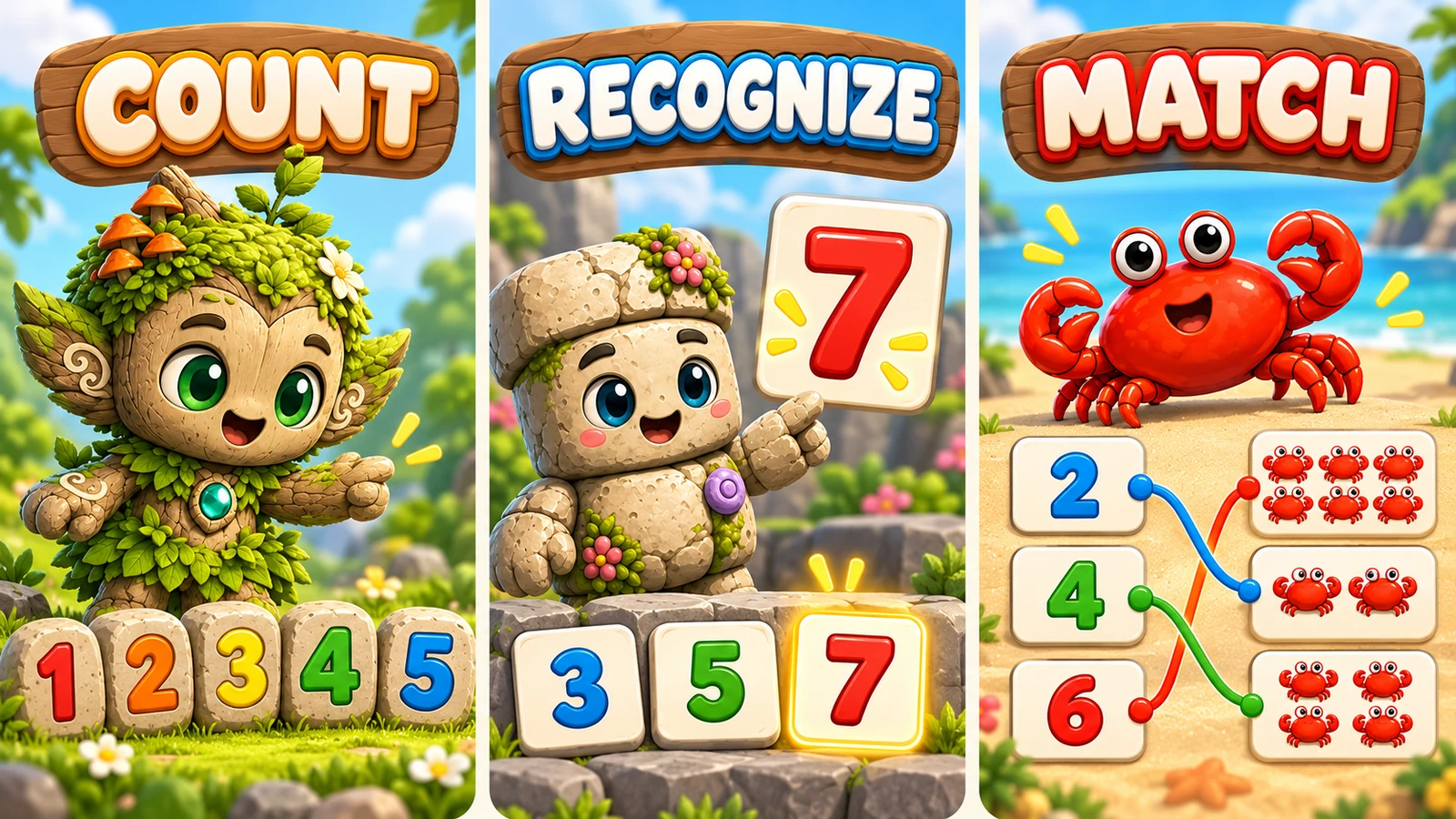
COUNTING
1 → 2 → 3 → 4 → 5
NUMBER RECOGNITION
See: 7
Understand: “That is seven.”
Both skills matter, and they can develop at different speeds.
A Simple Test: “Can You Find 7?”
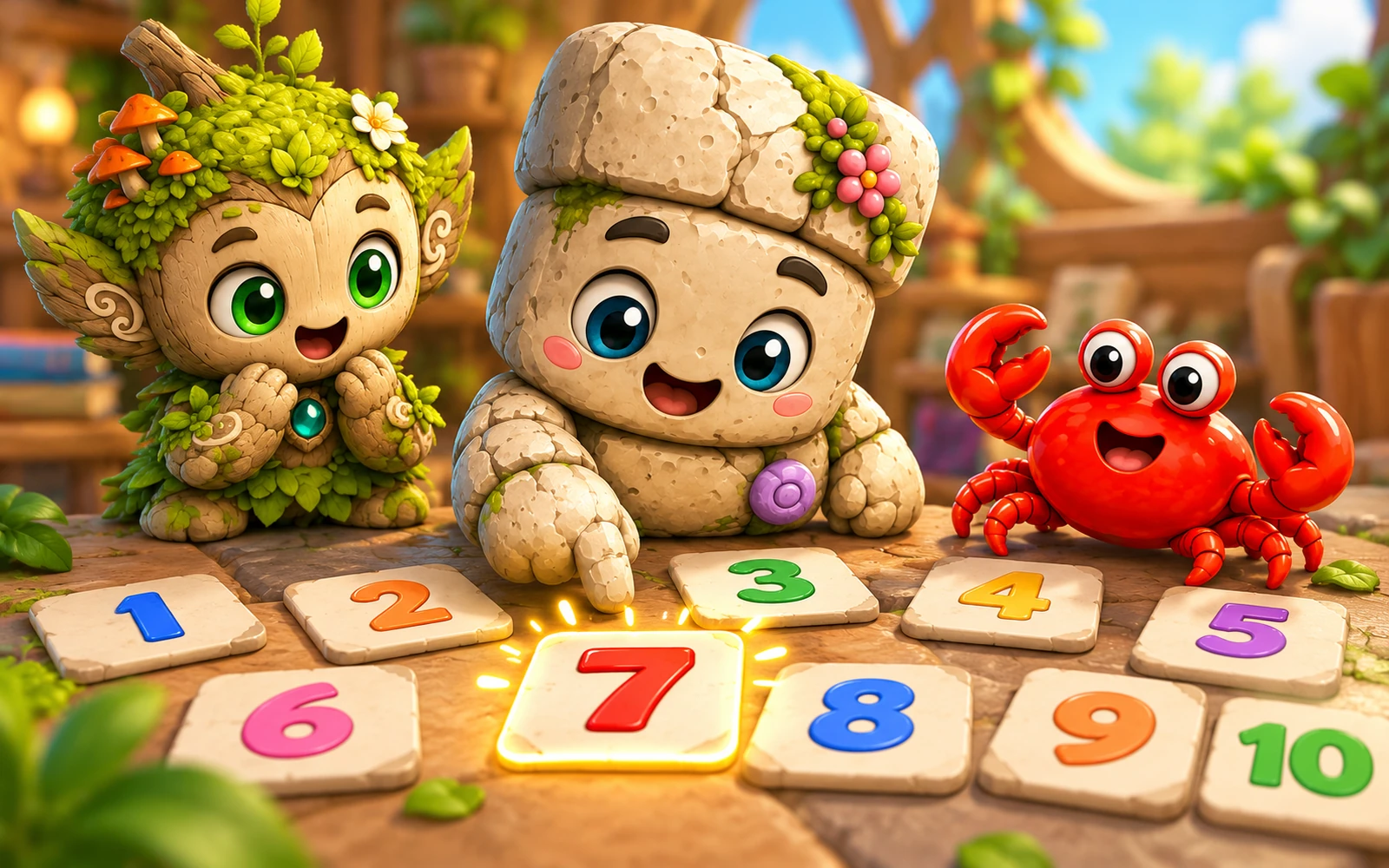
Try placing number cards from 1 to 10 on a table.
Instead of asking your child to count them in order, ask:
“Can you find number 7?”
Then try another number.
This changes the activity from memorising a sequence to visually identifying individual number shapes.
It is also a simple way to see which numerals already feel familiar and which ones may need a little more playful practice. For another hands-on idea, try our playful number activities for home.
Why Can Some Numbers Be Confusing?
Written numerals are visual symbols.
Young children are still becoming familiar with the curves, lines and shapes that make each one different.
Some numbers can look particularly similar at first.
For example:
- 6 and 9
- 3 and 8
The goal does not need to be perfect recognition immediately.
Repeated exposure through short, positive activities can gradually make each number shape more familiar.
5 Playful Ways to Practise Number Recognition
1. Find the Number
Write the numbers 1 to 10 on small cards and spread them around the room.
Choose one target.
Ask:
“Can you find number 4?”
When the correct card is found, choose another number.
Keep the activity short so it still feels like a game.
2. Spot Numbers in Everyday Life
Numbers are everywhere.
Look together at:
- clocks
- calendars
- house numbers
- remote controls
- books
- price labels
- elevator buttons
Choose one target number and see how many times your child can spot it during the day.
3. Match Numbers to Objects
Place a number card beside the matching quantity of familiar objects.
For example:
- 3 → three toy cars
- 5 → five blocks
This combines numeral recognition with an understanding of quantity.
4. Add Movement
Number practice does not have to happen sitting at a table.
Ask your child to:
- jump 3 times
- clap 5 times
- take 4 steps
- tap the table 2 times
Then show the written number.
This connects the visual numeral with movement, sound and quantity.
5. Turn Screen Time Into a Conversation
Educational games can become more interactive when an adult occasionally joins in.
Instead of only watching the screen, ask simple questions such as:
- “Which number are we looking for?”
- “Can you point to it before you tap?”
- “Can you find the same number somewhere else?”
These tiny conversations connect the game with real-world number practice.
From SEE to FIND to CATCH
Number Catcher uses a simple:
SEE → FIND → CATCH
pattern.
The child sees a target number, looks for the matching numeral and catches the correct one.
The basic challenge stays easy to understand while different environments and movements keep the activity visually playful.
The goal is not to replace teaching, books or time spent learning with parents.
Instead, Number Catcher is designed as another playful way for children to become more familiar with written numbers. You can read more about how Number Catcher uses number recognition through play.
Try a Two-Minute Number Challenge
You do not need a long lesson.
Choose three numbers your child already knows reasonably well.
Place those three number cards on a table.
Say one number aloud and ask your child to find it.
Shuffle the cards.
Repeat.
When that becomes easy, add one new number.
A very short game that ends while the child is still enjoying it can be easier to repeat another day.
Frequently Asked Questions
What age should children recognise numbers?
Children develop at different rates, so number learning should not become a race.
Some children become interested in written numbers very early. Others first become comfortable with counting objects and learn written numerals later.
The useful question is not:
“Does my child know every number yet?”
A better question is:
“Are numbers becoming familiar through enjoyable, age-appropriate experiences?”
Play, conversation, books, everyday objects and simple games can all contribute.
Is counting the same as recognising numbers?
No.
Counting involves number order and quantity.
Number recognition involves identifying a written numeral when you see it.
The two skills support each other, but being able to count to 10 does not automatically mean a child can recognise every written number from 1 to 10.
How can parents practise without worksheets?
Use things already around you.
Look for numbers on clocks, doors and books.
Make simple paper number cards.
Count toys.
Clap or jump a chosen number of times.
Ask your child to find a target number.
The activity does not need to feel like schoolwork to provide useful practice.
Keep Number Learning Playful
Early number learning is built through many small experiences.
Counting together is useful.
Recognising written numbers is useful.
Matching quantities is useful.
Most importantly, children should have opportunities to encounter these ideas in ways that feel positive and manageable.
Sometimes that means counting toys on the floor.
Sometimes it means finding a number on a clock.
And sometimes it means spotting the right number while exploring a colourful game world.
Practise Number Recognition with Number Catcher
Number Catcher is a playful number-recognition game from Shodoa Games. Explore the Sky, Sea and Space worlds, look for the target number and catch the correct one.
Explore Number Catcher